Mangroves
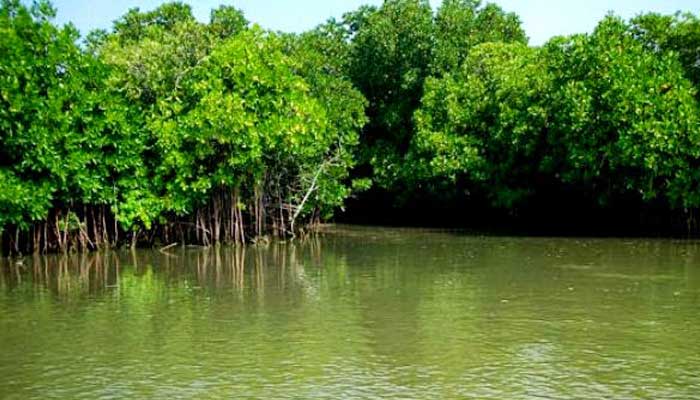
How Do Mangroves Survive in Salty Water?
Normally, most plants grow only in freshwater environments. This is because high salinity creates serious physiological problems for plants. In salty conditions, osmosis causes water to move out of plant cells, leading to dehydration and shrinkage. In addition, prolonged exposure to sodium (Na⁺) and chloride (Cl⁻) ions can result in ion toxicity, damaging enzymes and cellular structures.This naturally raises an important question: how do mangroves survive in salty water?Mangroves possess several remarkable adaptations that allow them to live in saline, waterlogged environments. Many mangrove species have specialized roots that act as salt filters, preventing most salt from entering the plant while absorbing water. Some species can tolerate salt entry and later excrete excess salt through specialized glands in their leaves. This is why dried salt crystals can often be observed on mangrove leaves.Mangrove leaves also have a thick, waxy cuticle that reduces water loss through transpiration. In some species, fine hair-like structures on the leaves reflect sunlight, reducing heat absorption and further minimizing water loss.Another major challenge in mangrove habitats is low oxygen availability in waterlogged soils. To overcome this, mangroves have specialized aerial roots called pneumatophores, which grow upward from the soil. These roots absorb oxygen directly from the air through pores known as lenticels, allowing respiration even in oxygen-poor mud.
Origins, Classification, and Evolution of Mangroves
Botanists believe that mangroves originated in Southeast Asia, from where their seeds dispersed via ocean currents to regions such as Africa, India, and Australia. Fossil evidence suggests that the earliest mangrove plants appeared during the Late Cretaceous to Paleocene epochs.Today, mangroves are found on almost all continents except Antarctica. Interestingly, plants referred to as “mangroves” are not all closely related taxonomically. Although they occupy similar ecological niches, many mangrove species evolved these adaptations independently through convergent evolution.Globally, about 70–75 species are recognized as true mangroves. These species share specialized adaptations that restrict them to intertidal environments. In contrast, mangrove associates (or false mangroves) lack some of these key adaptations and can survive in a wider range of habitats.
Genera of Mangroves
True Mangroves (Examples)
- Rhizophora spp.
- Avicennia spp.
- Bruguiera spp.
- Sonneratia spp.
- Ceriops spp.
- Aegiceras corniculatum
- Nypa fruticans
False / Associate Mangroves (Examples)
- Hibiscus tiliaceus
- Thespesia populnea
- Casuarina equisetifolia
- Pongamia pinnata
- Calotropis giganteaI
- Pomoea pes-caprae
An important difference is that false mangroves can survive outside tidal zones, such as inland plains or dry coastal areas, whereas true mangroves are restricted to saline, intertidal habitats.
How mangroves are used to protect coasts ?
Mangroves are often described as natural coastal shields. They reduce the impact of waves, storm surges, and even tsunamis by dissipating wave energy through their dense root systems. Research shows that when mangroves are combined with engineered coastal structures, they can significantly reduce construction costs and required wall heights.
However, many aspects of mangrove-based coastal protection are still poorly understood. Important knowledge gaps include: Forest morphology and structure. Vegetation patterns in estuaries and deltasField observations during extreme storm events. Research in this area is ongoing.
Importance of mangroves :
Mangroves provide numerous ecological and economic benefits. They serve as habitats for many species of birds, mammals, fish, and invertebrates, and they strongly support coastal fisheries. Mangroves act as carbon sinks, capturing and storing large amounts of carbon dioxide and helping mitigate climate change. Their complex root systems stabilize coastlines by anchoring soil and preventing erosion. Mangrove seedlings can colonize temporary sandbars, gradually transforming them into stable landforms over time. In addition, mangroves filter nitrates and phosphates carried by rivers into the sea, thereby improving water quality.